Egyptian Myth and Legend
Description
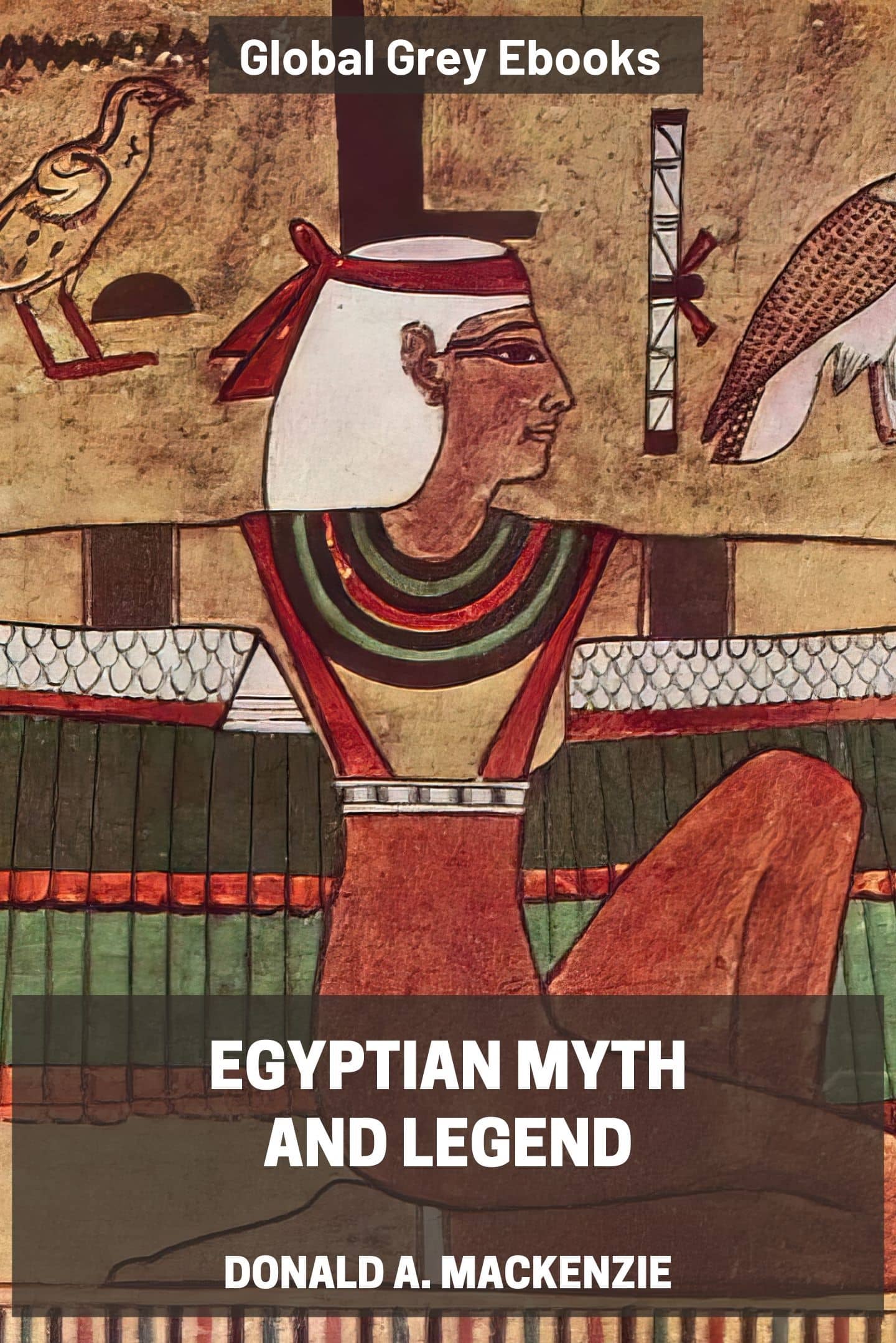
Egyptian Myth and Legend is a book by Donald A. Mackenzie, first published in 1907. It offers a rich, continuous narrative of ancient Egyptian mythology woven into the broader history of the Nile civilization, from its prehistoric beginnings to the Graeco-Roman age. Through this blend of mythological stories and historical background, the book introduces readers to the religion, folklore, and daily life of pharaonic Egypt. At the heart of the book are vivid retellings of the great Egyptian myths: the creation stories of the sun-worshippers, the rise of Ra and other cosmic deities, and the dramatic cycle of Osiris, Isis, Horus, and Set. Mackenzie explores temple rituals, funerary beliefs, and the journey of the soul after death, drawing on ancient hymns, religious texts, and folk tales to illuminate how Egyptians understood the gods, the underworld, magic, and the moral order of the universe. The legends are arranged so that they shed light on Egyptian customs, festivals, royal ideology, and the symbolism of sacred animals, amulets, and temple cities along the Nile. Beyond retelling myths, “Egyptian Myth and Legend” examines how Egyptian religion evolved over millennia, tracing shifts in divine hierarchies, local cults, and priestly power, and noting parallels with other Near Eastern traditions. Mackenzie includes discussions of what his era called “race problems” and comparative beliefs, reflecting early twentieth-century attempts to connect Egyptian culture with the wider ancient world.
Related ebooks