

The March Up Country
About This Book
What It's About
In 401 BC, Xenophon joined a force of Greek mercenaries known as the Ten Thousand, hired by the Persian prince Cyrus the Younger to help him seize the throne from his brother, King Artaxerxes II. When Cyrus was killed at the Battle of Cunaxa, the Greeks found themselves stranded deep in enemy territory with no clear way home. After their generals were treacherously killed under a truce, Xenophon was elected one of the new leaders and helped guide the survivors on a fighting retreat of well over a thousand miles across hostile mountains and rivers to the safety of the Black Sea coast.
Key Concepts
The narrative turns on leadership under crisis, the resourcefulness of ordinary soldiers stranded far from home, and the geography and peoples of the Persian Empire as seen through Greek eyes. It contains the famous moment when the exhausted army finally sights the sea and cries out "Thalatta! Thalatta!" ("The sea! The sea!"), long regarded as one of the most stirring passages in Greek literature.
About the Author
Xenophon (c. 430–354 BC) was an Athenian soldier, historian and philosopher, and a student of Socrates. He took part in the expedition described in this book, and later settled in the Peloponnese, where he wrote extensively on history, philosophy and estate management.
About This Edition
This is a 1897 translation by Henry Graham Dakyns.
At a glance
- Full title
- The March Up Country
- Alternative title
- Anabasis, The March of the Ten Thousand
- Author
- Xenophon (c. 430–354 BC)
- Translated by
- Henry Graham Dakyns (1897)
- Subject
- Ancient Greek history, military memoir
- Key concepts
- Leadership in crisis; the retreat of the Ten Thousand; ancient Persian geography and peoples
- Available formats
- PDF, EPUB, AZW3 (Kindle), Read Online — all free
- Copyright status
- Public domain
- Cover Artwork
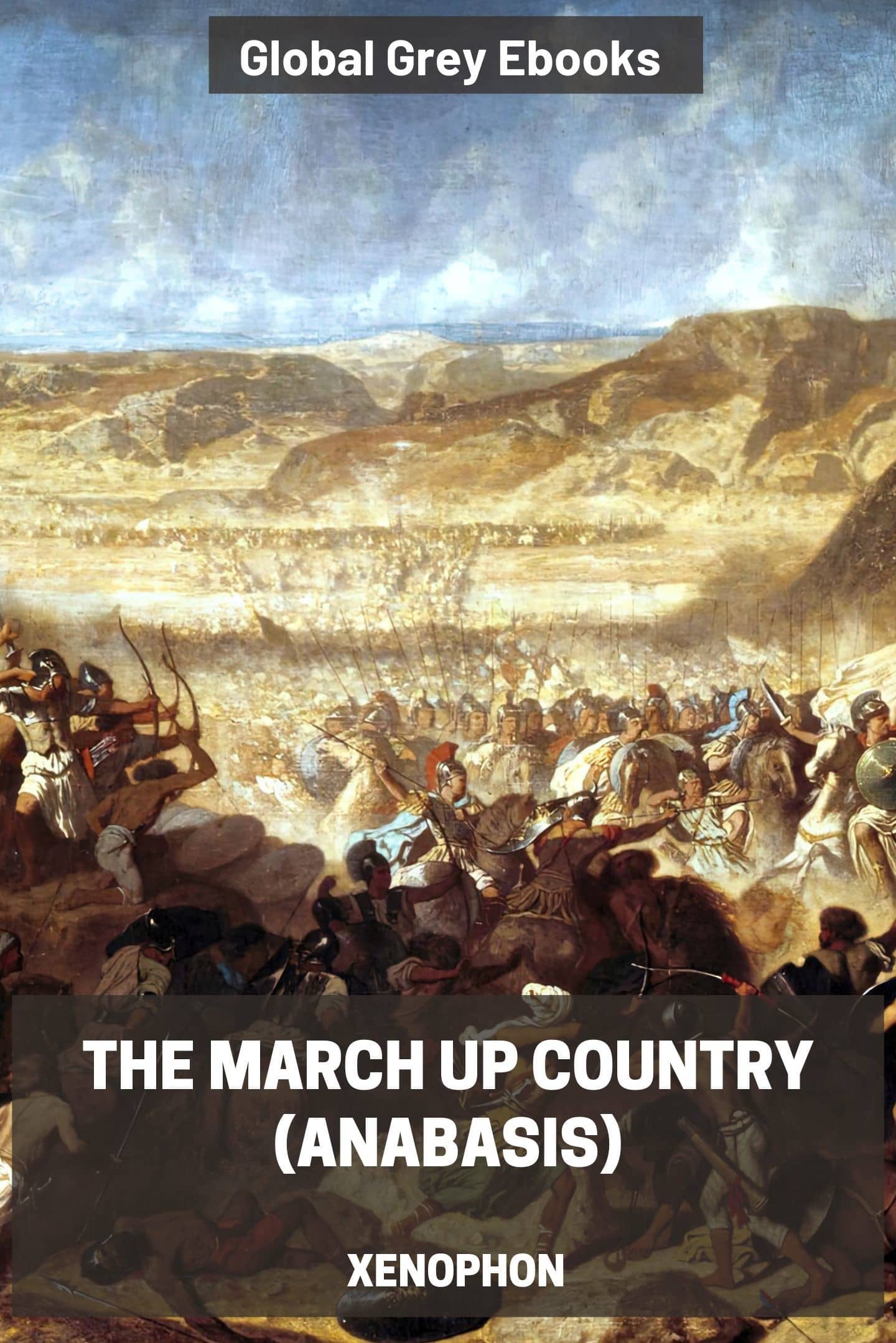
- Adrien Guignet - Retreat of the Ten Thousand
This edition is provided free of charge with no registration required. If you find it useful, please consider supporting Global Grey.
Related Ebooks


Browse more ebooks