

The Golden Bough
About This Book
What It's About
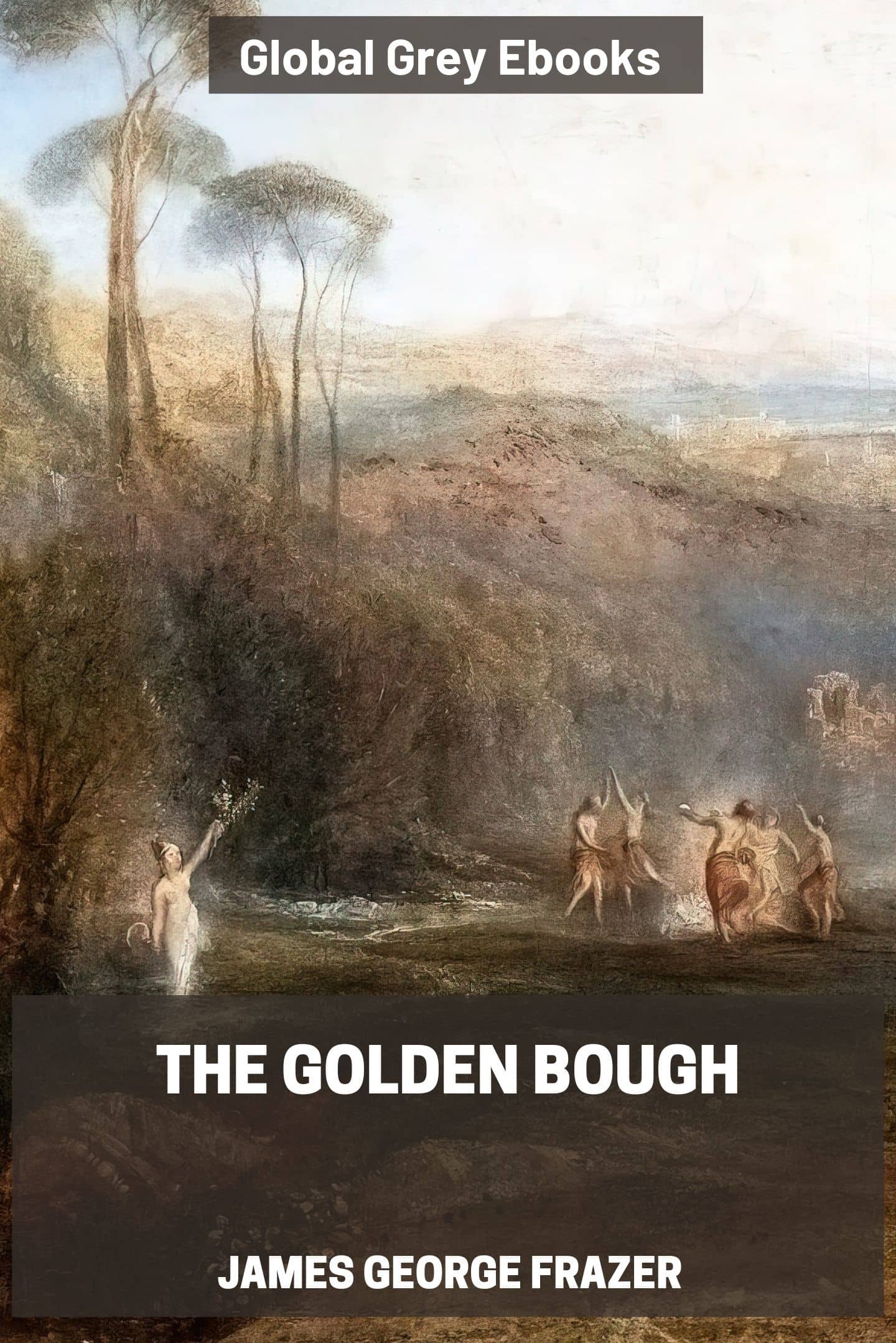
The Golden Bough opens with a puzzle: why did the priest of Diana's sacred grove at Nemi, in ancient Italy, hold office only until a runaway slave killed him and took his place? Frazer sets out to explain this strange rule of succession, and in doing so builds an enormous survey of folklore, ritual and belief drawn from Europe, Asia, Africa, the Americas and the Pacific. The title comes from the golden bough of Virgil's Aeneid, and Frazer said he was inspired by J. M. W. Turner's painting of the same name.
First published in 1890 in two volumes, the work grew over successive editions into a vast multi-volume study. It was a bestseller and shaped the early study of myth and comparative religion, and it left its mark on writers and thinkers well beyond anthropology, including T. S. Eliot and Sigmund Freud.
It has also been widely criticised. Later anthropologists rejected its neat evolutionary scheme and its reliance on second-hand reports from missionaries, colonial officials and travellers, and Frazer's comparisons between pagan rites and Christian belief caused controversy from the start. It remains valuable as a vast collection of customs and as a landmark in how the modern West came to think about myth and ritual.
Key Concepts
Frazer divides magic into two kinds: homeopathic magic, based on the idea that like produces like, and contagious magic, based on the idea that things once in contact remain connected. He argues that humanity moved from magic to religion to science, a scheme that was influential for decades and is now largely discredited.
At the centre of the book is the sacred king, whose life was believed to be bound up with the fertility of the land and who was therefore killed or replaced when his powers declined. Closely linked are the dying and reviving gods of the ancient world, such as Adonis, Attis and Osiris, the ritual of the scapegoat who carries away a community's sins, and the tree spirits and fire festivals of European folk custom.
About the Author
Sir James George Frazer (1854–1941) was a Scottish social anthropologist and classical scholar, born in Glasgow. Trained in the classics at Glasgow and Trinity College, Cambridge, he spent most of his working life as a fellow of Trinity. He rarely travelled to the cultures he wrote about, instead collecting evidence from books and from a wide network of correspondents. He is regarded as one of the founding figures of the comparative study of myth and religion. He died in Cambridge in 1941, within hours of his wife, Lilly.
At a glance
- Full title
- The Golden Bough
- Alternative title
- The Golden Bough: A Study in Magic and Religion
- Author
- James George Frazer (1854–1941)
- First published
- 1890
- Subject
- Comparative mythology, folklore, magic and religion
- Key concepts
- Sympathetic magic, sacred kingship, dying and reviving gods, the scapegoat, magic–religion–science
- Available formats
- PDF, EPUB, AZW3 (Kindle), Read Online — all free
- Copyright status
- Public domain
- Cover Artwork
- J. M. W. Turner - The Golden Bough
This edition is provided free of charge with no registration required. If you find it useful, please consider supporting Global Grey.
Related Ebooks



Browse more ebooks