
The Six Enneads
About This Book
What It's About
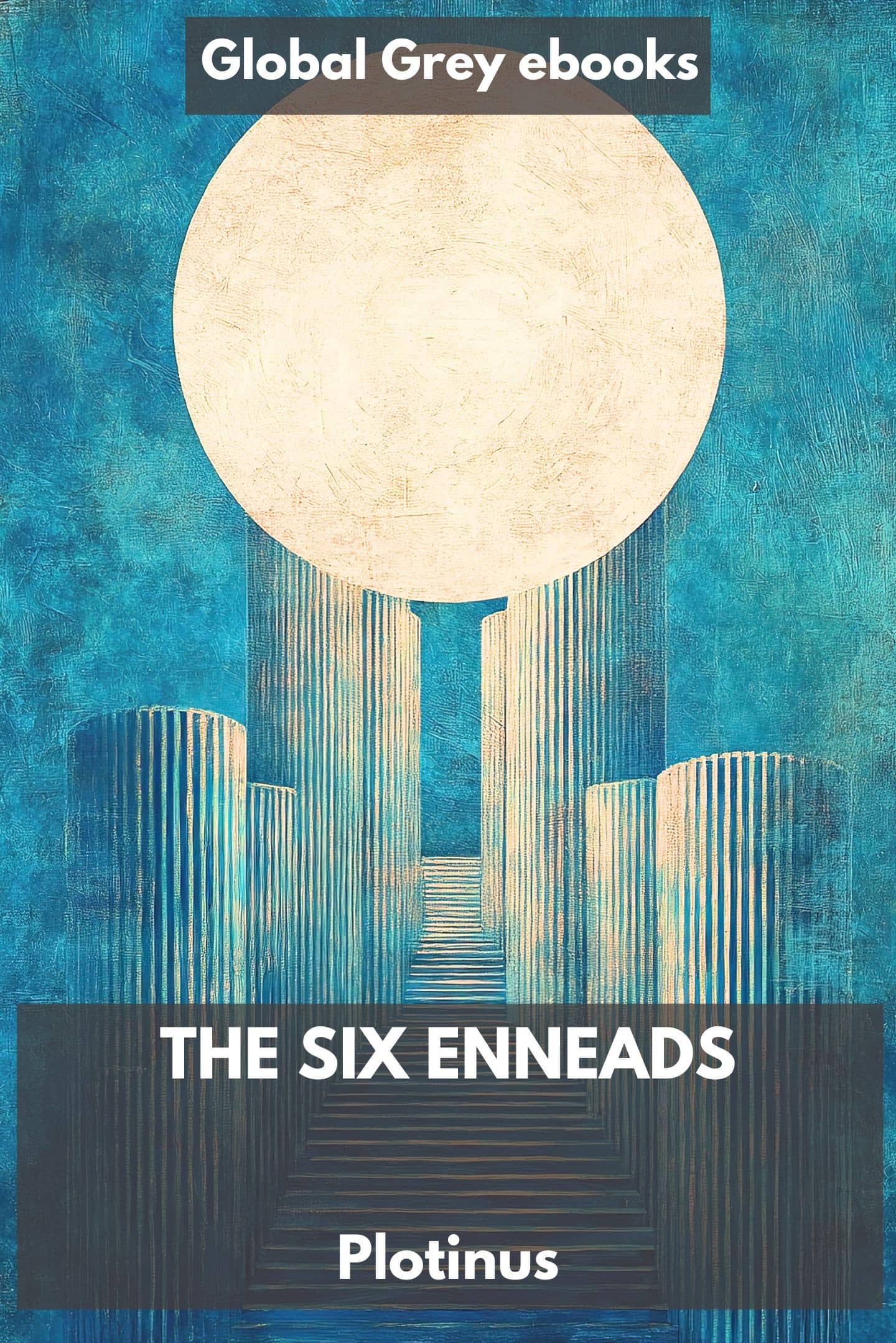
The Enneads is the collected body of Plotinus's writings, edited after his death by his student Porphyry into six groups of nine treatises (the Greek ennea means "nine"), fifty-four in all. They began as lecture and discussion notes, and Porphyry arranged them by theme rather than by date of composition. Ennead I deals with ethics and beauty, II with the physical cosmos, III with fate, providence and time, IV with the soul, V with Intellect and knowledge, and VI with being, number, and the One or Good. Together they set out a vision of reality as a descending order of existence, and of the human soul's path back up to its source.
The treatises are famously dense, allusive and repetitive, and they are better read as a series of meditations returning to the same core questions than as a systematic textbook. Their influence has been enormous, shaping Christian, Jewish and Islamic thought as well as the pagan philosophy of late antiquity. Within the work, the treatise "Against the Gnostics" (II.9) is a sharp critique of the Gnostic rejection of the material world, which Plotinus defends as an expression of divine order.
Key Concepts
At the summit of reality stands the One, a source beyond being and thought, which Plotinus also calls the Good. From it, without diminishing it, flows Intellect (Nous), the realm of eternal forms and true knowledge, and from Intellect flows Soul, which animates the material world. This process of emanation is balanced by a movement of return: through contemplation, virtue and the love of beauty, the soul can turn inward and upward. Matter sits at the lowest edge of this order, as a privation of form rather than a force of evil in its own right. The journey culminates in a moment of mystical union with the One, which Porphyry says Plotinus himself experienced a handful of times.
About the Author
Plotinus (c. 204/5–270) was a Greek-speaking philosopher, born and raised in Roman Egypt, and is regarded as the founder of Neoplatonism. He studied in Alexandria under Ammonius Saccas for around eleven years, then joined a Roman military expedition east in the hope of learning Persian and Indian wisdom. When it collapsed he settled in Rome around 244, where he taught a circle of students until failing health forced him to retire to an estate in Campania, where he died. Little is known of his early life, and he is said to have avoided discussing his family or birthplace.
About This Edition
This is a 1930 translation by Stephen MacKenna.
At a glance
- Full title
- The Six Enneads
- Alternative title
- The Enneads
- Author
- Plotinus (c. 204/5–270)
- Translated by
- Stephen MacKenna (1930)
- Subject
- Neoplatonism, ancient philosophy, metaphysics
- Key concepts
- The One, Intellect, Soul, emanation, mystical union
- Available formats
- PDF, EPUB, AZW3 (Kindle), Read Online — all free
- Copyright status
- Public domain
This edition is provided free of charge with no registration required. If you find it useful, please consider supporting Global Grey.
Related Ebooks