
Ecce Homo
Description
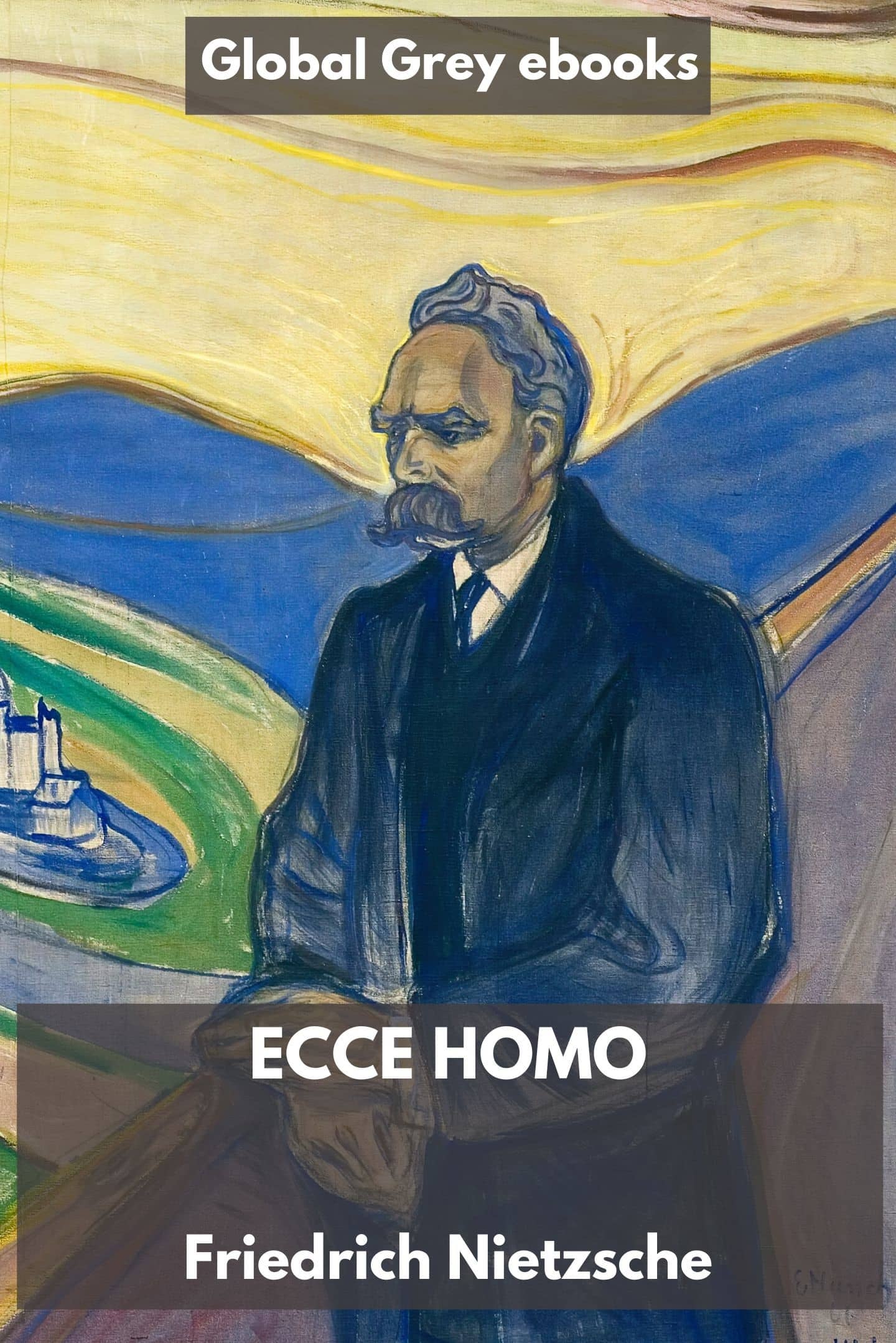
Ecce Homo is a book by Friedrich Nietzsche, first published in 1908. Written in 1888, shortly before the philosopher’s mental collapse, this provocative and intensely personal work serves as both an intellectual autobiography and a bold summation of his philosophy. In it, Nietzsche reflects on his life, his writings, and his place in the history of ideas, offering readers a rare glimpse into the mind behind some of the most influential works of modern thought.
Structured in chapters with striking titles such as “Why I Am So Wise” and “Why I Write Such Good Books,” the book examines Nietzsche’s earlier works, including Thus Spoke Zarathustra, Beyond Good and Evil, and On the Genealogy of Morality. He explains the development of concepts such as the Übermensch, the will to power, and the critique of traditional Christian morality. At once ironic, analytical, and unapologetically self-affirming, the text blends philosophical argument with sharp cultural criticism.
Far from a conventional autobiography, this philosophical memoir challenges readers to reconsider accepted moral values and confront the foundations of Western thought. Its tone — by turns witty, confrontational, and visionary — has sparked debate since its posthumous publication, with early readers divided between admiration and alarm. Today, it stands as a key text in existentialism, nihilism, and modern philosophy, offering insight into Nietzsche’s radical revaluation of values and his enduring influence on literature, psychology, and cultural theory. For anyone exploring nineteenth-century philosophy or seeking a direct encounter with Nietzsche’s voice, Ecce Homo remains an essential and compelling read.
This translation by Anthony M. Ludovici was first published in 1911.
Related ebooks