
The Theory of the Leisure Class
Thorstein Veblen
Buy the entire collection - all the ebooks on the site - for £60 - free updates. Find out more
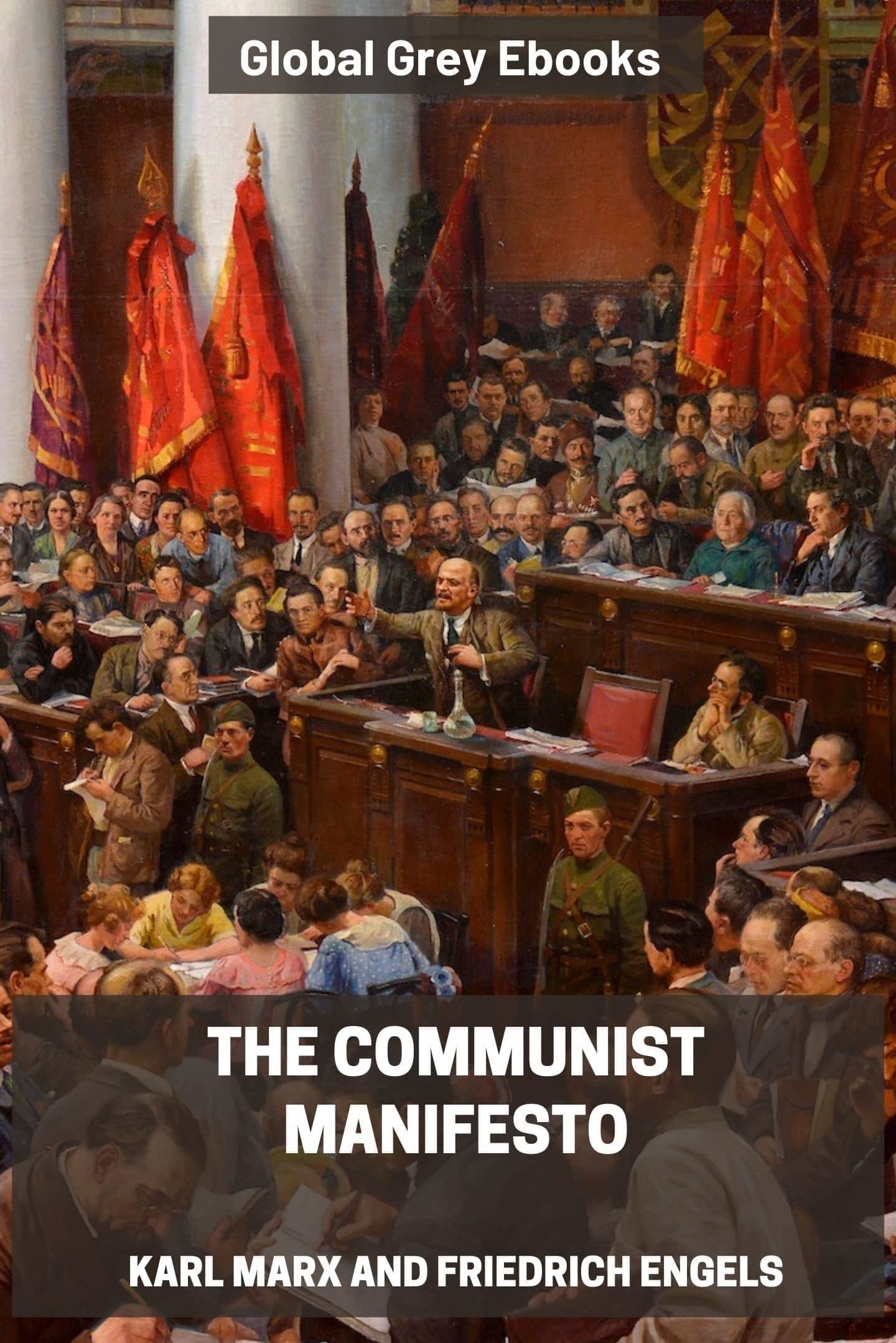
Commissioned by the Communist League, the Manifesto is a short, forceful pamphlet setting out the aims and outlook of communism. It opens with the claim that all history is the history of class struggle, then traces how the modern middle class (the bourgeoisie) overthrew feudalism and created a vast industrial economy, and in doing so brought into being its own opponent, the industrial working class (the proletariat). The authors argue that capitalism is prone to crisis and that workers will eventually seize political power. The text then answers common objections to communism, outlines measures a revolutionary government might take, and ends by surveying rival socialist movements and calling on workers of all countries to unite.
The Manifesto is best known for its materialist view of history, in which economic conditions and class relations drive social change. Its central ideas include the conflict between bourgeoisie and proletariat, the alienating effects of wage labour, the abolition of private ownership of the means of production, and the idea of a classless society. It is both a work of political theory and a piece of persuasive rhetoric, and it remains one of the most influential and fiercely debated political documents ever written. Critics point to the failure of many of its predictions and to the authoritarian states later established in its name. Supporters maintain that its analysis of capitalism, globalisation and inequality still holds up.
Karl Marx (1818–1883) was a German philosopher, economist and political theorist who spent much of his adult life in exile in London. Friedrich Engels (1820–1895) was a German philosopher and social theorist, and the son of a textile manufacturer, who became Marx's lifelong collaborator and financial supporter. Together they were the founders of what became known as Marxism.
This is an 1888 translation by Samuel Moore.
At a glance
This edition is provided free of charge with no registration required. If you find it useful, please consider supporting Global Grey.

Browse more ebooks