
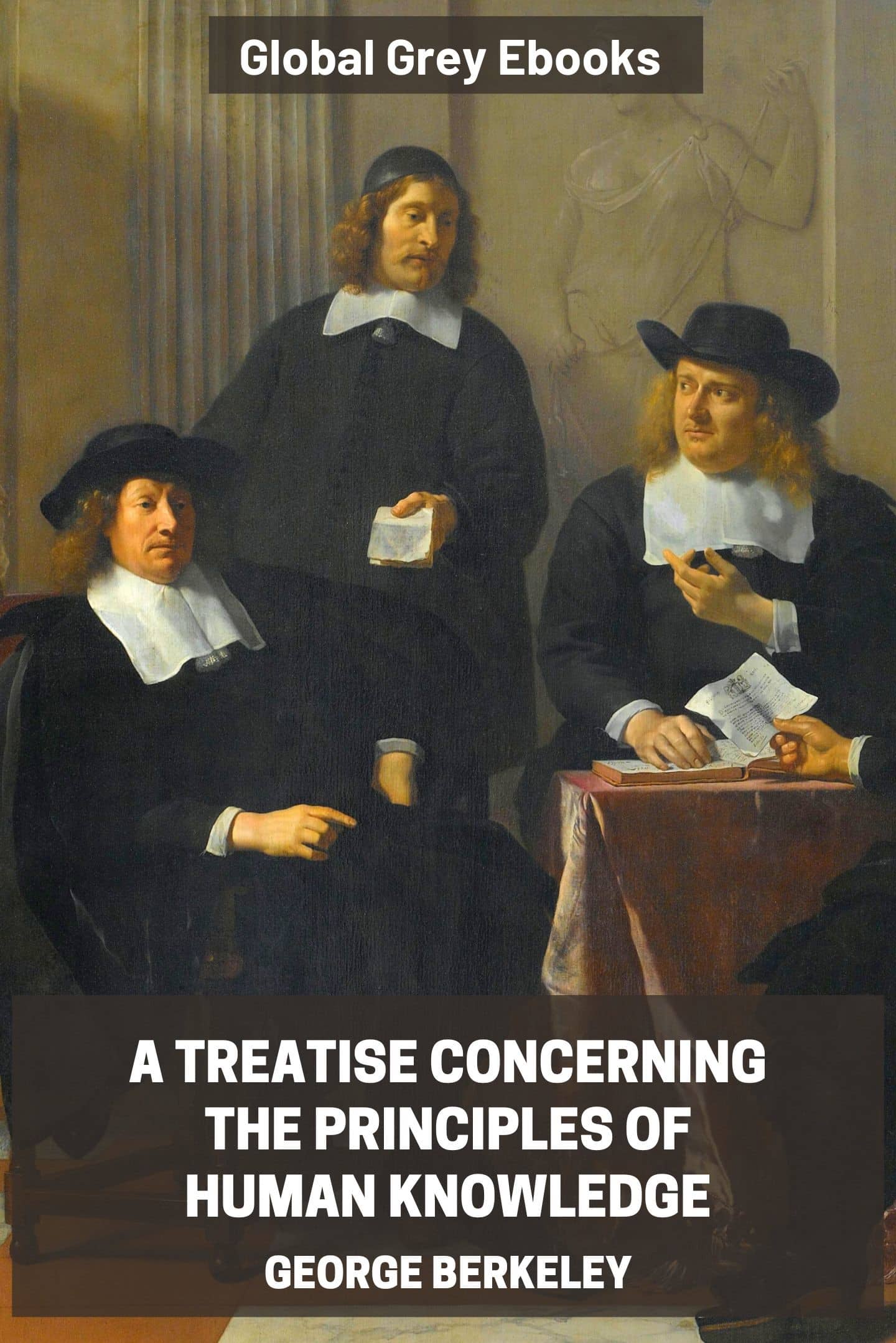
A Treatise Concerning the Principles of Human Knowledge
Description
A Treatise Concerning the Principles of Human Knowledge is a book by George Berkeley, first published in 1710. In this influential work of early modern philosophy, Berkeley sets out a bold and controversial theory that challenges the foundations of materialism. Arguing against the existence of matter as something independent of perception, he develops what later came to be known as subjective idealism — the view that reality consists only of minds and their ideas.
Writing with clarity and directness, Berkeley questions how we form ideas about the external world and whether abstract concepts truly exist. He contends that what we call “material substance” is unnecessary and incoherent, and that objects exist only insofar as they are perceived. His famous principle, often summarised as “to be is to be perceived,” forms the cornerstone of his argument. Through careful philosophical reasoning, he critiques prevailing theories of perception and addresses problems of language and knowledge.
Beyond its metaphysical claims, this classic work of epistemology explores the nature of human understanding, the limits of sense experience, and the relationship between perception and reality. Berkeley also integrates theological implications into his philosophy, proposing that the continued existence of the world is sustained by the eternal perception of God. The result is a rigorous yet accessible philosophical treatise that reshaped debates in 18th-century philosophy and continues to influence discussions in metaphysics and philosophy of mind.
A foundational text in British empiricism, this work remains essential reading for students of philosophy, idealism, and the history of ideas. Readers interested in classic philosophy books, theories of perception, and the development of modern metaphysical thought will find this treatise both challenging and deeply rewarding.
Related ebooks