
On the Improvement of Understanding
About This Book
What It's About
Left unfinished at Spinoza's death and published only afterward, this early treatise sets out to find a method for directing the mind toward the clearest and most certain knowledge possible. Spinoza begins by rejecting wealth, fame, and sensual pleasure as ultimately unsatisfying goals, and proposes instead that true and lasting happiness lies in understanding the union of the mind with the whole of nature. The bulk of the work is concerned with distinguishing reliable ideas from confused or fictitious ones, and with clearing away the mental habits — especially the misuse of language and imagination — that stand in the way of clear thought.
Key Concepts
Spinoza identifies four distinct modes of perception, ranked from hearsay and vague experience up to knowledge derived from an idea's own essence, and argues that only the highest of these yields certainty. He offers a set of provisional "rules of life" — practical guidelines for living reasonably while the search for true understanding is still underway — and works through the difference between true, false, fictitious, and doubtful ideas as a foundation for everything that follows.
About the Author
Baruch Spinoza (1632–1677) was a Dutch philosopher born in Amsterdam to a family of Portuguese-Jewish descent. Raised within the city's Jewish community, he was formally excommunicated in 1656 after his unorthodox religious views became known. He spent the rest of his life earning a modest living as a lens grinder while developing a systematic philosophy grounded in the idea that God and Nature are one and the same. Much of his work was considered too controversial to publish during his lifetime.
About This Edition
This is an 1883 translation by R. H. M. Elwes.
At a glance
- Full title
- On the Improvement of Understanding
- Alternative title
- 'Tractatus de Intellectus Emendatione', 'Treatise on the Emendation of the Intellect'
- Author
- Baruch Spinoza (1632–1677)
- First published
- 1677
- Translated by
- R. H. M. Elwes (1883)
- Subject
- Epistemology and method
- Key concepts
- The four modes of perception; true vs. fictitious ideas; the highest good
- Available formats
- PDF, EPUB, AZW3 (Kindle), Read Online — all free
- Copyright status
- Public domain
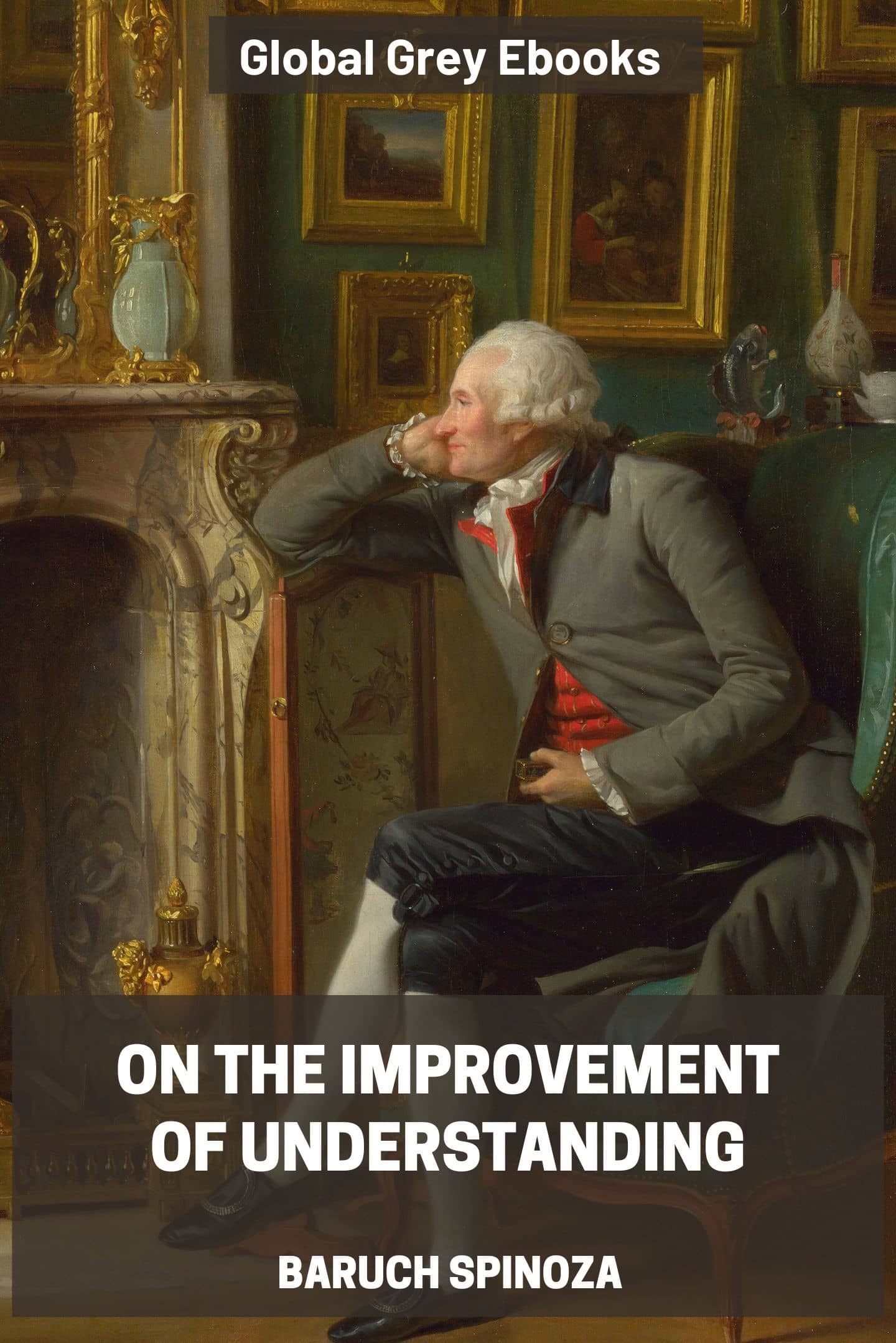
- Cover Artwork
- Henri-Pierre Danloux - The Baron de Besenval in his Salon de Compagnie
This edition is provided free of charge with no registration required. If you find it useful, please consider supporting Global Grey.
Related Ebooks

Browse more ebooks