
Monas Hieroglyphica by John Dee
Description
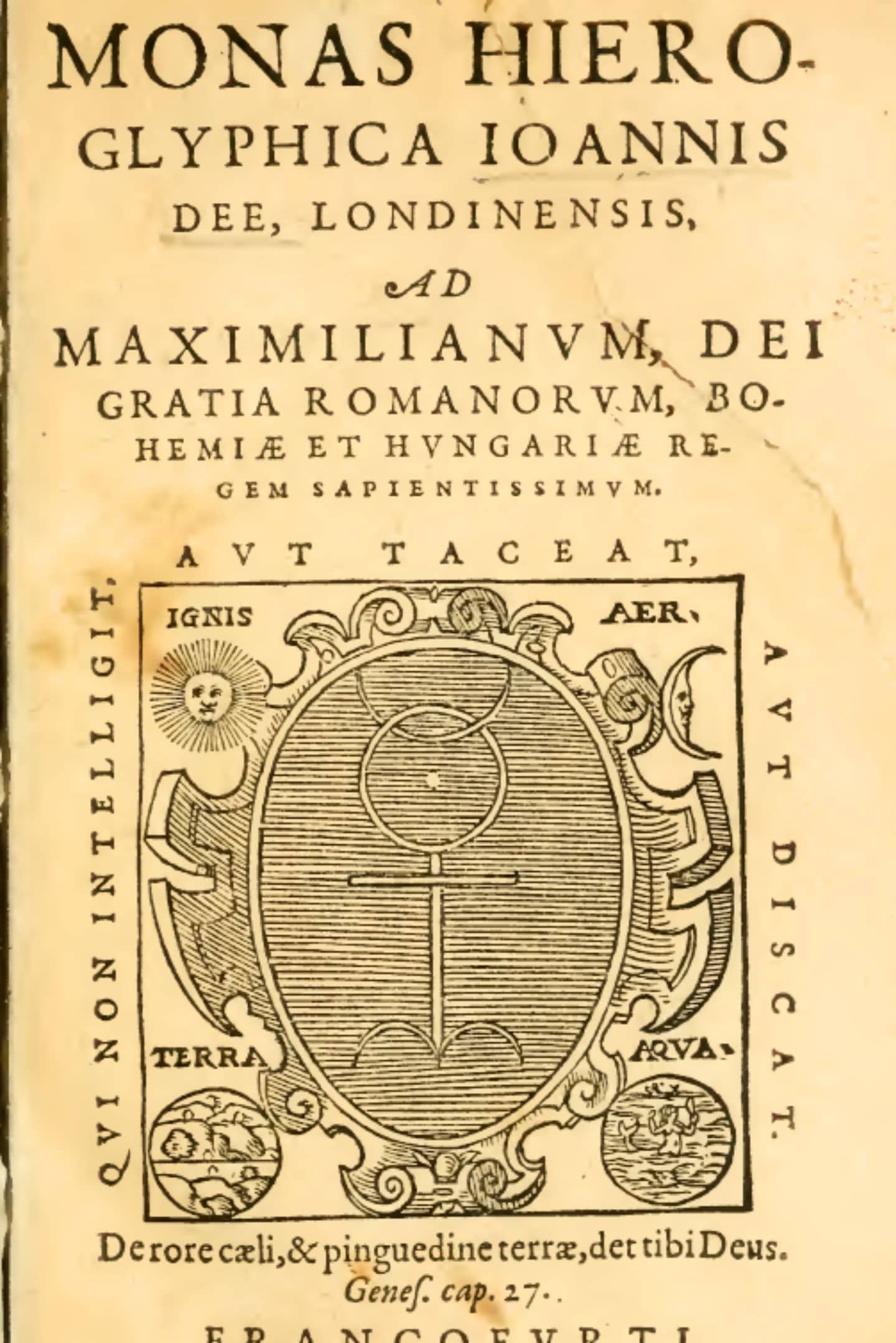
Monas Hieroglyphica is a book written in Latin by John Dee, first published in 1564. In this short but exceptionally dense work, Dee presents a single symbolic figure - the “Monas” - which he claims contains the fundamental principles underlying astrology, alchemy, mathematics, and divine creation itself. Written during the height of the Renaissance occult revival, the text reflects a worldview in which number, symbol, and cosmos are inseparably linked. The book unfolds as a series of aphoristic theorems explaining how the Monas symbol is constructed from elemental shapes associated with the sun, moon, planets, and classical elements. Dee argues that this symbol encodes universal laws governing both the material and spiritual worlds. Drawing on Hermetic philosophy, Neoplatonism, and medieval alchemical tradition, the work seeks to demonstrate that true knowledge arises from understanding the hidden correspondences embedded in nature. Unlike practical alchemical manuals, Monas Hieroglyphica is primarily philosophical and symbolic, demanding careful contemplation rather than laboratory instruction. Dee’s approach reflects the older tradition of sacred geometry and divine proportion, where mathematics is viewed as a bridge between human reason and divine intellect. The book also reveals Dee’s ambition to reconcile Christian theology with esoteric wisdom inherited from antiquity. Today, Monas Hieroglyphica is regarded as one of the most important texts of Western esotericism. It continues to attract readers interested in alchemy, Hermetic symbolism, Renaissance magic, and the intellectual history of the occult sciences. Though famously challenging, the work rewards patient readers with insight into a worldview that treats symbols as living keys to cosmic order.
More Scanned PDFs