
Finnegans Wake
About This Book
What It's About
This is less a conventional novel than an attempt to render a night's dreaming in words. It centres on the Earwicker family of Dublin: a publican whose initials, HCE, recur in endlessly shifting guises, his wife Anna Livia Plurabelle, their twin sons Shem and Shaun, and their daughter Issy. Dream logic dissolves the boundaries between people, places and eras, so that the family becomes Adam and Eve, Irish heroes and every quarrelling household in history. The story is told in a language of Joyce's own invention, packed with portmanteau words and puns drawn from dozens of languages. The book's structure is circular.
Key Concepts
The book leans on Giambattista Vico's idea that history moves in repeating cycles, and rise, fall and renewal echo through every chapter. Other recurring themes include the fall of a great man, sibling rivalry, guilt and rumour, and the River Liffey as a figure of female and natural continuity. Language is the real subject: Joyce treats words as living, unstable things that carry many meanings at once. The book is famously difficult, and readers have long been divided over whether it is a towering achievement or an impenetrable experiment. Even so, it rewards patient reading aloud, and it has spawned a devoted community of readers and scholars.
About the Author
James Joyce (1882–1941) was an Irish writer, born in Dublin and educated by the Jesuits before studying at University College Dublin. He left Ireland in his early twenties and spent most of his adult life in Trieste, Zurich and Paris, often supporting himself by teaching English while battling poor eyesight. Though he lived abroad, Dublin remained the centre of his imagination, and he is regarded as one of the most influential figures of literary modernism.
At a glance
- Full title
- Finnegans Wake
- Author
- James Joyce (1882–1941)
- First published
- 1939
- Subject
- Experimental modernist fiction
- Key concepts
- Dream language, cyclical history, myth and family, wordplay
- Available formats
- PDF, EPUB, AZW3 (Kindle), Read Online — all free
- Copyright status
- Public domain
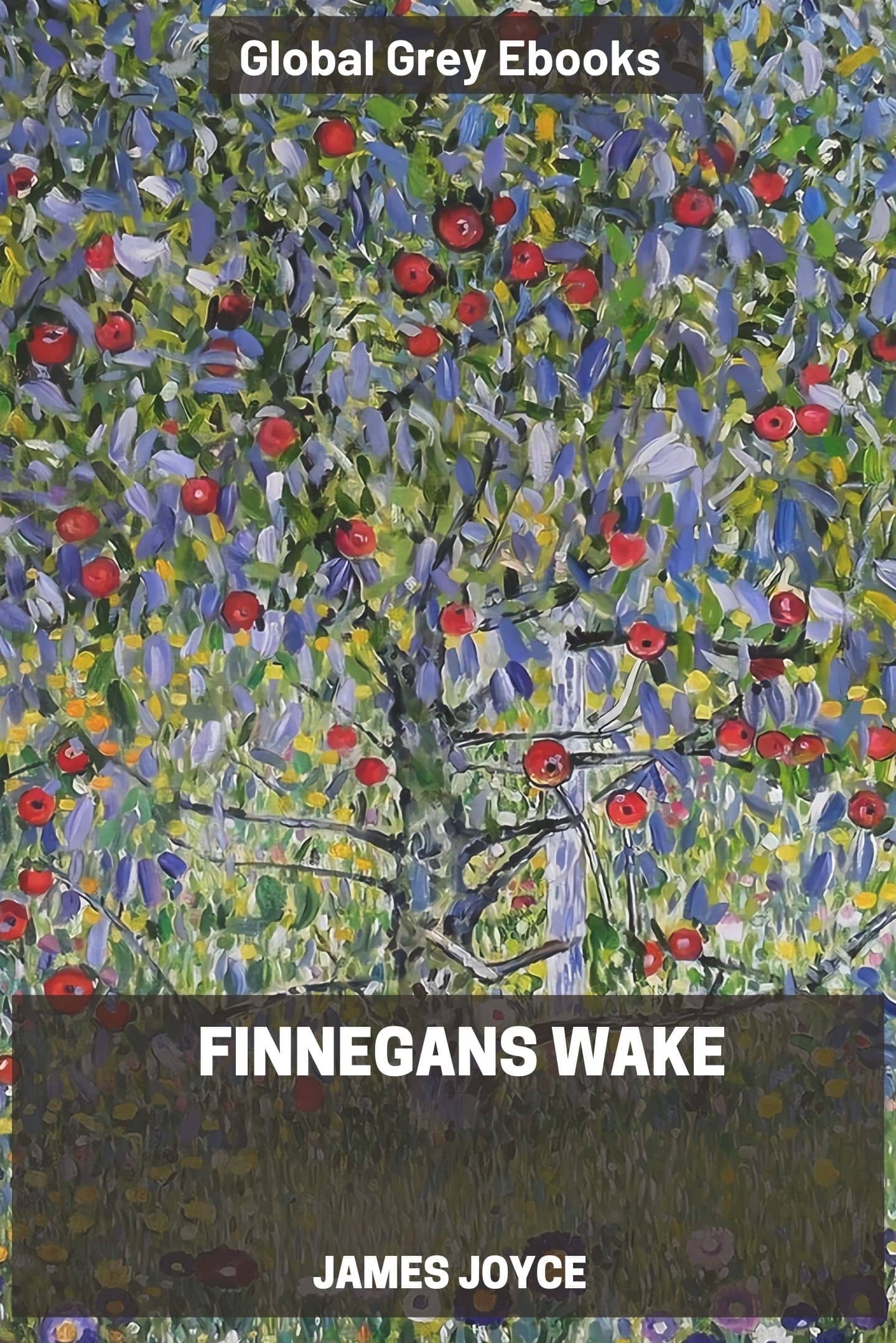
- Cover Artwork
- Gustav Klimt - Apple Tree I
This edition is provided free of charge with no registration required. If you find it useful, please consider supporting Global Grey.
Related Ebooks
Browse more ebooks